Product
Fuller’s earth for edible-oil bleaching
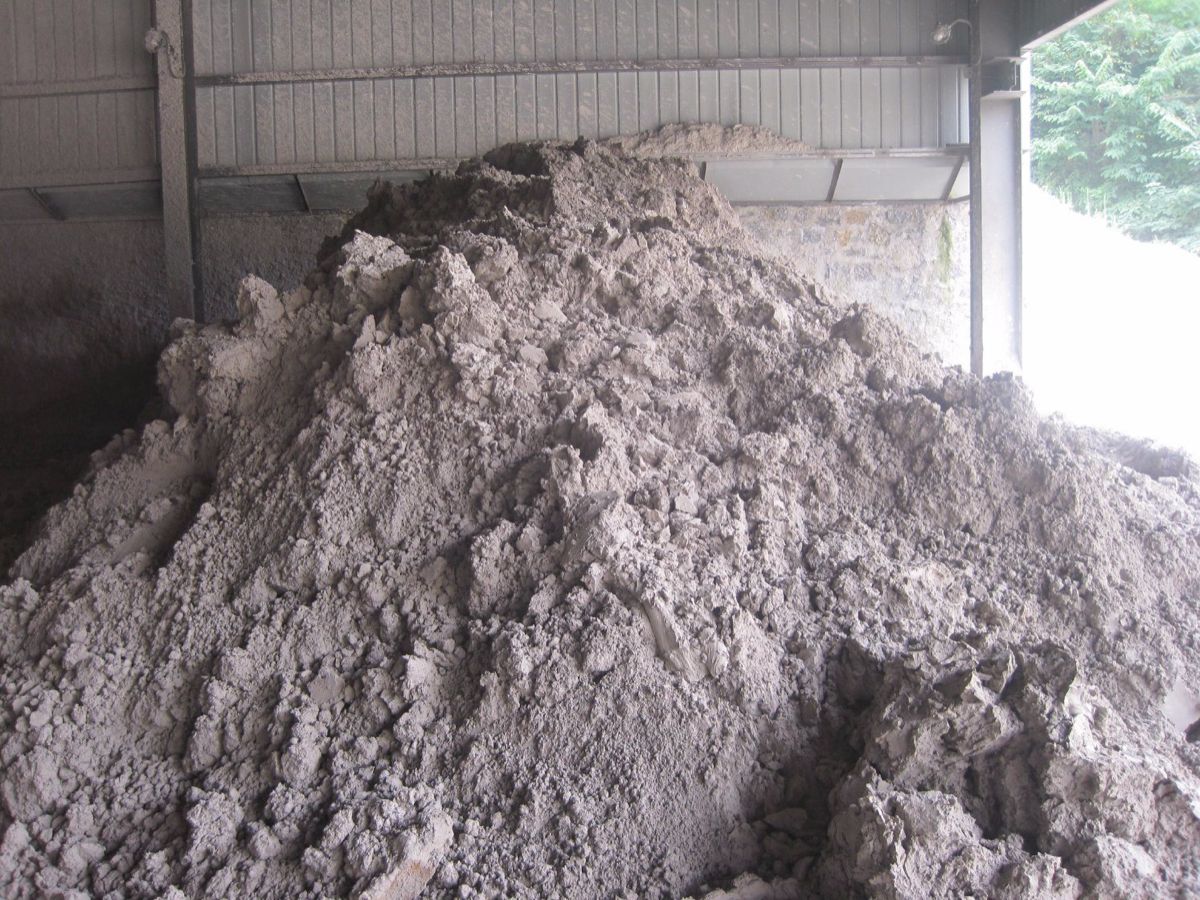
Fuller's earth is the bleaching earth refiners use for rice bran, sunflower, groundnut, soybean and palm oil. Ours comes from our own mines at Vikarabad, Telangana, in three grades: mined, acid activated and carbon activated.
Identity
Three grades
One mine, three grades, each for a different job. The analysis below is for the mined grade. Acid activation changes the chemistry, so it does not apply to the activated grades.
| Grade | What it is | Forms | Analysis |
|---|---|---|---|
| Mined | As dug, dried and milled. Not treated with acid. | Powder · granular 5–20 mm | Published below |
| Acid activated | Our mined earth, treated with acid to the pH your process needs. | Powder | On request |
| Carbon activated | Activated earth blended with activated carbon, for oils that need extra colour and contaminant removal. | Powder | On request |
Powder is for contact bleaching. Granular is for percolation and column filtration.
Chemical analysis — the mined grade
Figures for our mined grade from Vikarabad, from our Halal India certification documentation.
| Oxide | Determination | Value | Unit |
|---|---|---|---|
| SiO₂ | Silica | 51.82 | % |
| Al₂O₃ | Alumina | 10.43 | % |
| Fe₂O₃ | Iron oxide | 13.19 | % |
| TiO₂ | Titanium dioxide | 2.23 | % |
| CaO | Calcium oxide | 2.53–8.00 | % |
| MgO | Magnesium oxide | 6.02 | % |
| P₂O₅ | Phosphorus pentoxide | 0.03 | % |
| Na₂O | Sodium oxide | 0.08 | % |
| K₂O | Potassium oxide | 3.32 | % |
| SO₃ | Sulfur trioxide | 0.03 | % |
| LOI | Loss on ignition @ 1000 °C | 10.28 | % |
Loss on ignition is measured at 1000 °C and is not the same determination as moisture. Free moisture at 105 °C is listed separately below.
On iron content
Our iron oxide reads 13.19%. The parent rock at Vikarabad is Deccan basalt, and iron is what makes that soil red.
Iron held in the clay structure is not the same as iron that ends up in your oil. The figure that matters to a refiner is iron pickup in the bleached oil, measured to AOCS Ca 20-99. Ask us to run it against your oil and we will send you the result.
Testing to your specification
These are the parameters edible-oil refiners specify. Tell us which ones your approval needs and we will put the figures in front of you. pH, moisture and bulk density we run in our own laboratory, and third-party testing goes to SGS.
| Parameter | Method |
|---|---|
| pH (5% slurry) | ISO 787-9 |
| Moisture (free, 105 °C) | ISO 787-2 |
| Bulk density (loose / tapped) | ISO 787-11 |
| Particle size — % < 5 µm / % < 90 µm | ISO 13320 |
| Surface area (BET) | ISO 9277 |
| Free acidity | Titrimetric |
| Chloride | IC / titration |
| Lovibond colour reduction | AOCS Cc 13e-92 |
| Oil retention | Hexane extraction of spent cake |
| Filtration rate | On request |
| Iron pickup in bleached oil | AOCS Ca 20-99 |
| Heavy metals — Pb, As, Cd, Hg | ICP-MS |
We quote bleaching performance with its conditions: the oil, the dose, the temperature and the contact time.
Which grade fits your process
The mined grade reads SO₃ at 0.03% — essentially none. Acid activation uses 70 to 90 grams of sulphuric acid per 100 grams of clay and residual sulfate survives the wash, so that figure is the evidence that this grade has not been acid-treated. Its iron, magnesium and aluminium all remain in place; activation strips them out.
That matters beyond chemistry. Acidic bleaching earth is a recognised contributor to 3-MCPD ester formation in refined oils, and the published mitigation guidance points refiners toward clays at pH above 6.8. If you are managing 3-MCPD exposure, ask us for the pH of the mined grade.
For colour and chlorophyll, use the acid-activated grade. Un-activated earth is weaker on chlorophyll and needs a higher dose. Tell us the oil and the problem, and we will send the grade that suits it for a bench trial.
Request a sample
Samples are drawn from a production lot and ship with that lot’s analysis.